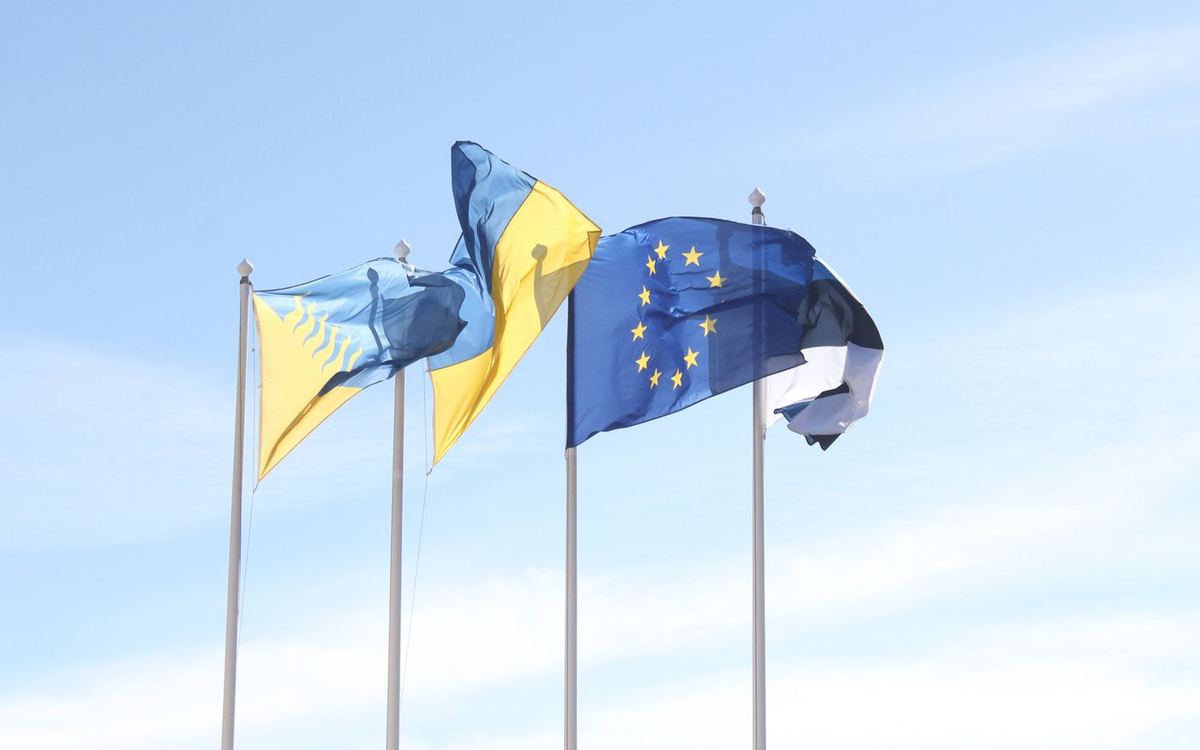
Europe approaches AI from a different starting point than the United States or China. Its largest technology companies hold smaller cash reserves than the biggest American firms, and its chip and cloud industries are smaller. But Europe is pursuing a distinct strategy: that trustworthy, regulated, locally controlled AI will matter to governments, banks, hospitals, and manufacturers who prefer not to hand everything to a foreign provider. The best-known face of that strategy is Mistral AI, a French company that has built both open-weight and commercial models, a chat assistant called Le Chat, and a growing enterprise business.
This article explains Mistral and the wider European picture: the main players, the regulatory framework, the idea of digital sovereignty, who uses European AI, and how to test it. The treatment is balanced and factual, because Europe's approach has both enthusiastic supporters and thoughtful critics.
The short answer: what is Europe's AI strategy?
Europe's strategy rests on the idea that AI will be bought not only on raw capability but on trust: clear rules, strong privacy protections, local data control, and the option to run models on private infrastructure. Mistral is the best-known European model builder, offering capable models, some with open weights, and an assistant that competes with American assistants on many everyday tasks. Whether Europe can match the largest players on frontier capability is an open question. Whether it can serve customers who prioritize sovereignty and compliance is a question with a more concrete market behind it.
Who is in the European AI scene
Mistral AI
Mistral is a Paris-based company, started by researchers with backgrounds at large AI labs. It rose quickly by releasing compact, efficient open-weight models that performed well for their size, then expanded to larger commercial models, an API platform, and a consumer-and-business assistant. Its positioning has three parts:
- Efficiency. Models designed to deliver strong results at lower cost and smaller size.
- Openness. A mix of open-weight releases under permissive licenses and commercial, closed models available through its platform. Which models fall in which category has changed over time, so each model's license is the reference.
- European identity. Hosting options in Europe, attention to European languages, and an offer to enterprises and governments that care about data jurisdiction.
Le Chat, the assistant
Le Chat is Mistral's chat product. Like other assistants, it handles writing, summarizing, translation, coding help, web search, image generation, and file analysis, with free and paid tiers. It is often described as fast and as focused on European users and languages. Features and plan limits change, so the product page shows what is current. For comparison with other well-known assistants, see the reviews of ChatGPT, Claude, and Gemini.
The platform for developers and enterprises
Mistral offers an API, hosted models, options for deploying on a customer's own infrastructure, and tools for building custom assistants. Enterprise customers can often choose private deployments, which is where the sovereignty message becomes concrete.
Other European players
Europe has more than one contender, and the list moves.
- Research labs and universities. European universities and institutes have long contributed to AI research, and several produced open models and datasets.
- Aleph Alpha (Germany). Positioned for enterprise and government use with an emphasis on explainability and sovereignty. The company has shifted its strategy over time, so its current focus is worth checking.
- Black Forest Labs (Germany). Known for image generation models that gained a wide following among creators.
- Open-science collaborations. Groups working on multilingual and open models, often with public funding and shared supercomputers.
- Startups across the continent. Companies building voice, translation, coding, legal, and healthcare AI. DeepL, known for translation, is an example of a European language-AI company that predates the current wave.
- Chip and infrastructure players. ASML in the Netherlands makes the machines used to manufacture advanced chips, a quiet but essential piece of the global AI supply chain. European cloud providers and national supercomputing centers also play roles.
- Large companies as customers and partners. Large European firms in banking, automotive, telecom, and industry are major buyers and sometimes co-developers.
Because founding, funding, and strategy shift quickly, any list is a snapshot, and current news is the best check.
The regulatory framework: the EU AI Act and related rules
Europe has been among the first jurisdictions to adopt a comprehensive AI law. Here is a plain-language overview. For legal decisions, a qualified professional and the current official text are the right sources, since details and timelines have been phased in and may be adjusted.
The EU AI Act in brief
The EU AI Act is a law that regulates AI systems according to risk. Its core structure:
- Unacceptable risk. Certain uses are banned outright, such as some forms of manipulative systems or social scoring by public authorities.
- High risk. Systems used in sensitive areas, such as hiring, credit decisions, education, critical infrastructure, medical devices, and law enforcement, face requirements like risk management, data quality, documentation, human oversight, and accuracy and security standards.
- Limited risk. Systems like chatbots face transparency duties, such as telling people they are interacting with an AI, and labeling certain synthetic content.
- Minimal risk. Most everyday AI uses face few or no new obligations.
The Act also includes specific obligations for providers of general-purpose AI models, the large foundation models behind assistants. These include documentation, information for downstream developers, and respect for copyright rules, with extra requirements for models judged to pose systemic risks. The requirements apply in stages over several years, and implementing guidance and codes of practice have been developed along the way.
The Act can apply to companies outside Europe if they offer AI systems to people in the EU. That is why providers headquartered in many countries pay attention to it.
Privacy law: GDPR
The General Data Protection Regulation already governs how personal data may be collected and used in Europe. It gives people rights over their data, including access and deletion, and requires a legal basis for processing. Its application to AI is an ongoing subject of regulator attention, covering training on personal data, accuracy of outputs about real people, and data transfers. Regulators in several European countries have examined AI services at various points, so the practical impact is real, not theoretical.
Other rules
Europe has also adopted laws on digital services, digital markets, data sharing, and cybersecurity that affect how AI products are built and delivered. Copyright and the use of protected works in training remain active areas of legal debate, in Europe and elsewhere.
The debate over regulation
This is an area where reasonable people disagree, and both sides deserve a fair presentation.
The supportive view. Clear rules build trust, protect people from harm, create a level field for companies, and may become a reference model for other regions, the way GDPR influenced privacy laws elsewhere. Businesses in regulated industries often want legal clarity before adopting AI.
The critical view. Compliance costs fall hardest on small companies, uncertainty can slow product launches in Europe, and heavy rules may affect where investment and talent go. Some European founders and executives have publicly called for simpler or delayed rules. Others argue the larger gap is capital and scale, not regulation.
The middle view. Rules matter less than whether Europe can build compute, fund startups at scale, and turn research into products. Regulation is one factor among many.
Each camp points to evidence, and the long-term effects are not yet settled. A reasonable approach is to judge the rules by their effect on a specific use case rather than by slogans.
Digital sovereignty: the heart of the pitch
Sovereignty is the word that comes up most when European leaders and companies discuss AI. It means different things to different people, but the core ideas are:
- Data jurisdiction. Where is data stored and processed, and which country's laws and courts can reach it? A European bank may prefer a provider based in Europe, hosting in Europe, under European law.
- Operational control. Can a customer run the model on its own servers or a trusted local cloud, and keep running it if a supplier changes terms or access?
- Strategic independence. Governments consider the risk of depending on a small number of foreign companies for critical infrastructure, whichever country those companies are in.
- Language and culture. Models trained mainly on English data may serve smaller European languages and local contexts less well. European labs emphasize multilingual capability.
Sovereignty is not purely a European idea. Governments and companies in many regions have similar interests, and the articles on the AI arms race and DeepSeek and China's AI surge show the same themes from other angles. It also interacts with how large cloud providers respond: some now offer European-controlled or locally operated cloud arrangements to address these concerns. Whether such arrangements satisfy a given customer's legal and policy requirements is a case-by-case question.
What Mistral's models are like
Version names change constantly, so here are the durable patterns.
Efficient and compact
Mistral became known for models that perform well for their size, which makes them attractive for running on modest hardware or serving cheaply. Smaller models are fast and inexpensive, and larger ones handle more complex work.
A spectrum of openness
Some models have been released with open weights under permissive licenses, which means developers can download, run, and adapt them. Others, especially the strongest, are offered through the company's platform and partners under commercial terms. When openness matters to a project, the license on the specific model is the reference. For background on what open weights do and do not mean, see the Meta AI and Llama review.
Multilingual and coding abilities
European languages are a stated focus, and coding-focused models are part of the lineup. Quality varies between languages and models, so testing the specific languages needed is important.
Mixture-of-experts designs
Like several other labs, Mistral has used architectures where only part of the model activates for each piece of text, improving efficiency. The concept is explained in how large language models work.
Realistic limits
Compared with the very largest closed models, Mistral's models have generally been competitive on many tasks but have not always led on the hardest reasoning, long-context, or tool-use benchmarks. That gap can shift by release. The practical question is whether a model is good enough for a given task at a given price, and that can be measured.
Strengths of the European approach
- Compliance-oriented positioning. For companies subject to European law, a provider designed around those rules can simplify procurement.
- Deployment flexibility. The option to run models privately, on-premises or in a trusted cloud, appeals to regulated industries.
- Efficiency. Capable smaller models reduce cost and energy use.
- Multilingual focus. Better support for European languages is a real benefit for local-language content.
- Diversity of suppliers. More competitors mean more choice and less dependence on a handful of firms.
- Strong research base. Europe has deep talent in mathematics and machine learning, which feeds its startups.
Challenges and criticisms
- Scale and capital. The largest American labs and cloud providers have access to bigger budgets and more compute. Europe's funding for startups and its supply of large data centers are smaller, though investment has been growing.
- Compute dependence. European AI companies often train and run models on hardware and cloud services supplied by non-European firms, which sits in tension with the sovereignty goal.
- Regulatory burden and uncertainty. As discussed, some argue the rules slow innovation. Others say they are a competitive advantage in the long run.
- Brand and ecosystem. Established assistants have very large user bases, deep integrations, and substantial marketing. A newer entrant must win on specific strengths.
- Talent competition. Skilled researchers may be recruited by larger employers elsewhere.
- Fragmentation. Europe is many countries, languages, and markets, which can slow scale compared with a single large home market.
Who uses European AI
Real-world adopters tend to share a few traits.
- Governments and the public sector. Agencies that need data to stay within national or European control.
- Banks, insurers, and other regulated firms. Organizations with strict compliance and audit needs.
- Healthcare and legal organizations. Where confidentiality is crucial and local deployment is attractive.
- Industrial and manufacturing companies. Firms that want custom models trained on proprietary technical data and run privately.
- Developers who want open, efficient models. Hobbyists and startups worldwide who use open-weight models for cost and flexibility reasons.
- Multilingual businesses. Teams producing content or customer service in several European languages.
- Everyday users. People who like Le Chat's speed or want an assistant from a European company.
Use of these tools is not limited to Europe. Many of the developers who use Mistral's open models are elsewhere.
How Mistral and European AI compare with the large American assistants
| Question | Mistral and European players | Large American assistants |
|---|---|---|
| Frontier capability | Competitive on many tasks | Often reported to lead on the hardest tasks |
| Open weights | A real part of the strategy, license varies by model | Mixed: some closed, some open |
| Data jurisdiction | A selling point for European customers | Regional options offered, varying by vendor |
| Ecosystem and integrations | Growing, smaller | Large, with many third-party tools |
| Multilingual European focus | A stated priority | Strong in major languages, varies elsewhere |
| Regulatory posture | Built with EU rules in mind | Adapting to EU rules |
| Brand awareness | Smaller globally | Very high |
| Price | Often competitive, live pricing pages are the reference | Wide range |
For general-purpose assistants compared task by task, see ChatGPT vs Claude vs Gemini.
Who may find Mistral a good fit
Strong fits
- Teams that need European data handling or a provider aligned with European regulation.
- Developers wanting efficient open-weight models to self-host or fine-tune.
- Multilingual content teams working across European languages.
- Organizations that want deployment control, including private or on-premises options.
- Cost-conscious builders who value capable smaller models.
Cases where other options may fit better
- Users who want the widest feature set and do not weigh jurisdiction heavily. A larger assistant may offer more polish and integrations.
- Teams deeply embedded in another ecosystem, such as Microsoft 365 or Google Workspace, where integrations matter more than origin. See the Copilot review and Gemini review.
- People needing a particular niche tool that only a bigger platform offers.
How to test Le Chat and the Mistral API
Reviews age quickly, but a structured test does not.
Step 1: Define the tasks
Write down 10 to 20 real tasks. Include a few in each language that matters. Examples include rewriting a service-page intro, generating word-puzzle clues, explaining a code bug, and summarizing a long article.
Step 2: Run the same prompts across tools
Use identical prompts in Le Chat and one or two other assistants. The guide to prompting that works explains how to write prompts specific enough to compare fairly.
Step 3: Test languages and nuance
For work in French, German, Spanish, Italian, or another language, check idiom, tone, and grammar. Ask for translation both ways and look for stilted phrasing. Native speakers make the best judges.
Step 4: Check accuracy and sources
Ask factual questions with known answers. If web search is available, request sources and open them. For why this step matters, read why AI makes things up.
Step 5: Examine data settings
Find the privacy page, the data retention policy, and options about whether conversations are used to improve models. Businesses can also ask about data processing agreements, hosting location, and available deployment options.
Step 6: If building, test the API
Try small and large models on a sample of the workload. Measure quality, speed, and cost. Check rate limits, uptime history, and documentation quality. Designing an app so providers can be switched is a useful safeguard.
Step 7: Re-test regularly
New models arrive often. Keeping a test set and re-running it every few months is a low-effort habit.
What this means for a small studio or local business
Most small studios and local businesses do not need European data sovereignty in the way a bank does, but several lessons carry over.
Provider diversity is healthy. Projects can be designed so that the AI part is swappable. If one provider raises prices or changes terms, moving is easier. European and open-weight models are valuable alternatives to include in the comparison.
Efficient models fit small budgets. A puzzle site that generates daily clues or a game with flavor text benefits from cheap, fast models. Quality control still matters, as explained in AI puzzles and brain games.
Language support matters for local audiences. A business serving a multilingual community may find a model with strong language support more useful than one with the highest overall benchmark score.
Compliance is not just for large companies. Privacy law may apply to any business that collects personal data from European visitors, regardless of size. A website with AI features that process visitor data should review the legal obligations, and a consultation may be worthwhile. For practical guidance on adding AI to a small company, read AI for small business, and for caution about what to share with chatbots, what not to tell a chatbot.
Content and search. European-language content, structured answers, and clear sourcing all matter as search shifts toward AI-generated answers. This is discussed in SEO in the age of AI.
Looking ahead without predicting
Specific releases and funding rounds are hard to forecast. The durable questions are:
- Can European companies reach frontier capability with less capital and compute than their rivals, or will they succeed by specializing?
- Will regulation prove an asset or a drag, and will it be simplified, delayed, or adopted elsewhere?
- Will sovereignty requirements create a protected market for European providers, or will global clouds meet them with local arrangements?
- How will open-weight competition evolve among European, American, and Chinese labs?
- How much will compute infrastructure in Europe grow, and who will own it?
These questions can be followed through official EU publications, company announcements, and reputable technology and policy reporting.
How to check live details
- Model lineup, licenses, and prices. Mistral's official site, documentation, and model cards.
- Le Chat features and plans. The product's pricing and help pages.
- EU AI Act timelines and obligations. The European Commission's official pages and legal counsel.
- GDPR guidance on AI. National data protection authorities and the European Data Protection Board.
- Hosting options. A cloud provider's regional offerings and data processing terms.
- Competitor news. Reputable coverage, cross-checked with company sources.
Quick takeaways
- Europe's AI strategy centers on trust, regulation, and sovereignty, with Mistral as its best-known company.
- Mistral offers efficient models, a mix of open-weight and commercial options, the Le Chat assistant, and enterprise deployment choices.
- The EU AI Act sorts AI uses by risk and adds duties for general-purpose model providers. GDPR already governs personal data.
- Supporters see the rules as a trust advantage. Critics point to cost and speed concerns. Both views cite evidence.
- Sovereignty means data jurisdiction, operational control, strategic independence, and language support.
- Main users are governments, regulated industries, multilingual teams, and developers who like efficient open models.
- Testing Le Chat and the API on real tasks, including the relevant languages, and designing projects so providers can be swapped, are practical steps.
Frequently asked questions
Is Mistral open source?
Partly. Mistral has released some models with open weights under permissive licenses and offers its strongest models through commercial terms. "Open weights" means a model can be downloaded and run, which is not identical to the full open-source definition. The license of each model is the reference, since terms differ.
How does Le Chat compare with ChatGPT?
For many everyday tasks, such as writing, summarizing, translation, and coding help, Le Chat is a capable assistant. Larger assistants may offer more features, integrations, and top-end reasoning. A comparison on real tasks and languages gives the most useful answer. The ChatGPT review and Claude review can help frame it.
What is the EU AI Act, and does it apply to a given business?
It is a European law that regulates AI by risk level, with bans on certain uses, strict rules for high-risk systems, transparency duties for things like chatbots, and obligations for providers of general-purpose models. It can apply to companies outside Europe that offer AI to people in the EU. Whether and how it applies depends on what is built or deployed, so the official summaries and legal advice are the right sources.
Is European AI more private?
It can be, especially with European hosting, strong contractual terms, or private deployment, and when European privacy law applies. But privacy depends on specific products, settings, and contracts, not on geography alone. Each provider's data policy is worth reading, and common sense applies to what is shared. See what not to tell a chatbot.
Why does Europe emphasize digital sovereignty?
Governments and companies consider the risk of depending on a few foreign providers for critical technology, and of foreign laws reaching their data. Sovereignty efforts aim to keep control over data, infrastructure, and choices. Similar interests exist in other regions, which is why open-weight and locally hosted models attract attention worldwide.
Can Mistral models run on a personal computer?
Open-weight Mistral models, especially the smaller ones, can often run on consumer hardware, particularly in compressed (quantized) form. Larger models need more powerful equipment. The process is similar to running other open models, described in the Meta AI and Llama review. Downloads should come from official sources, and the license should be read first.
Will Europe keep pace with the United States and China in AI?
Nobody knows. Europe has strong research talent and some promising companies but less capital and compute than the largest American players. A likely path is specialization in efficiency, multilingual capability, and trusted deployment rather than matching every frontier benchmark. Investment, infrastructure, and adoption are better indicators than headlines. For the wider landscape, see the AI arms race.